Best Air Quality Monitors for Home Assistant 2026 Guide
Disclosure: As an Amazon Associate, The Gear Nest earns from qualifying purchases. This adds no cost to you.
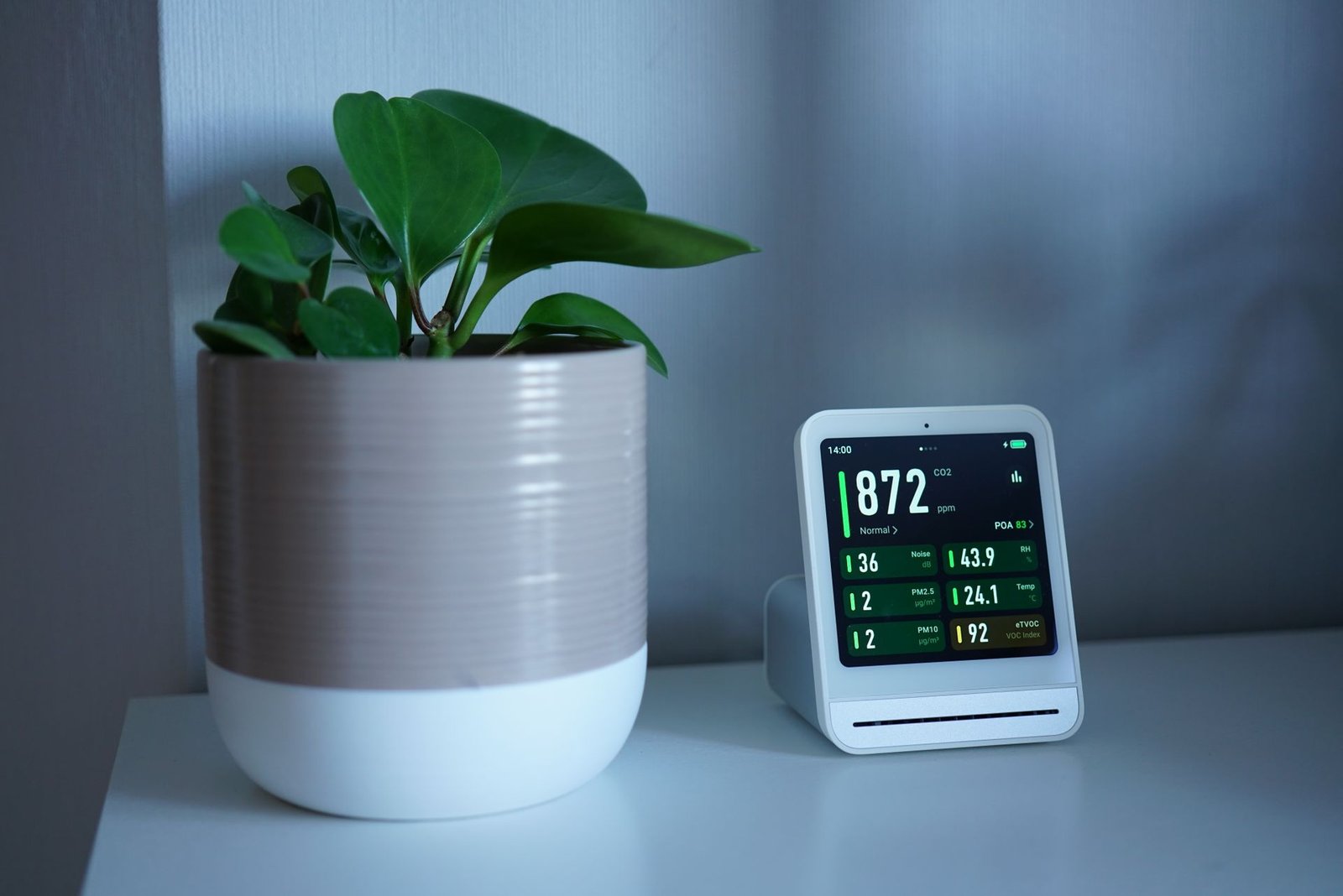
Home Assistant already knows when your doors open, when the dryer finishes, and when a basement window gets left ajar. What it probably doesn’t know — unless you’ve added a sensor — is whether the room you’re sitting in has 1,800 ppm of CO2 and the kind of air that makes you drowsy after lunch. An air quality monitor for Home Assistant fixes that in a hurry: it lets you trigger an ERV, a bath fan, an air purifier, or just a phone notification based on the number on a sensor, not the mood of whoever opened a window last.
Below are five air quality monitor picks for 2026, chosen for Home Assistant friendliness, sensor pedigree, and the specific job each one is best at. Prices accurate at time of writing and subject to change.
Quick comparison
| Product | Best For | Key Spec | Price Tier | Rating | Buy Link |
|---|---|---|---|---|---|
| AirGradient ONE | Best overall / open source | PM2.5 + CO2 + TVOC + NOx + T + RH, HA-certified | $$ | ★★★★★ | Check Price on Amazon |
| Aranet4 Home | Best CO2-only / portable | NDIR CO2 + 4-year battery + e-ink | $$ | ★★★★★ | Check Price on Amazon |
| Qingping Air Monitor Lite | Best for HomeKit → HA bridge | PM2.5 + PM10 + CO2 + T + RH, HomeKit | $$ | ★★★★☆ | Check Price on Amazon |
| Airthings View Plus | Best for radon detection | Radon + PM2.5 + CO2 + VOC + T + RH + pressure | $$$ | ★★★★☆ | Check Price on Amazon |
| SwitchBot Meter Pro CO2 | Best SwitchBot ecosystem CO2 | NDIR CO2 ±50 ppm, 400–9000 ppm, 1-second sampling | $$ | ★★★★☆ | Check Price on Amazon |
AirGradient ONE — Best Overall
The one to buy if you want a Wirecutter-grade monitor with first-class Home Assistant support and no cloud lock-in.
Why it makes the list: The AirGradient ONE (model I-9PSL-DE) is the closest thing to a reference air quality monitor in the DIY/HA world. It’s “Works with Home Assistant” certified and supports native local discovery on compatible installations, which means you plug it in, HA finds it on the LAN, and sensor entities show up — no cloud account required. It also runs open-source hardware and firmware, so if you ever outgrow the stock software you can flash ESPHome and keep everything inside your network. Independent eval backs it up: this air quality monitor was recognized for Best Accuracy for Indoor PM2.5 in the 2025 AIRLAB Microsensors Challenge, has been named Wirecutter’s Best Air Quality Monitor, and holds a Consumer Reports CR Recommended distinction.
Key specs:
- Measures PM2.5, CO2, TVOC, NOx, temperature, and humidity
- SenseAir NDIR CO2 sensor, Plantower PMS5003 laser PM sensor, Sensirion SGP41 TVOC/NOx sensor, Sensirion SHT40 T/RH sensor
- Works with Home Assistant certified; also supports Homey out of the box and ESPHome via community firmware
- Subscription-free dashboard + free API; data can also go to Prometheus or your own server
- 1.3-inch OLED display plus 11-LED color bar for at-a-glance status
- UV-resistant ASA enclosure, wall or desk mount, junction-box-compatible screw spacing
- USB-C powered (2 m USB-A to USB-C cable + 5V/2A US adapter in the box)
- Each unit is calibrated for PM2.5 in AirGradient’s chamber and ships with a digital test report
Watch out for: TVOC and NOx are reported as Sensirion index values intended to track changes over time, not as laboratory-grade absolute gas concentrations — treat them as trend indicators, not EPA numbers. The ONE is USB-C powered, so it needs an outlet in reach; there’s no battery option.
Aranet4 Home — Best CO2-Only / Portable
The pick if you want a single, extremely accurate CO2 number you can read across a room without opening an app.
Why it makes the list: The Aranet4 Home is from SAF Tehnika, a Latvian engineering company founded in 1999, and it’s built around an NDIR CO2 sensor — the same technology AirGradient uses, and generally the most reliable for consumer indoor CO2. Where it stands apart is the form factor: battery life of up to four years and a power-efficient e-ink display, so you can set it on a desk, hang it in a classroom, or carry it into a meeting room without ever thinking about charging. The on-device number is large and color-coded, and the Aranet4 can buzz when CO2 crosses a threshold you set — useful when you just want a dumb alarm instead of a dashboard.
Key specs:
- Measures CO2, temperature, relative humidity, and atmospheric pressure in real time
- NDIR (nondispersive infrared) CO2 sensor
- Up to 4-year battery life, cable-free
- Power-efficient e-ink display with large CO2 numerals and color coding
- Optional buzzer alert when CO2 goes too high
- Free iOS/Android app stores up to 90 days of history with graphs
- Made in the European Union
Watch out for: This is a CO2-only meter (plus temperature, humidity, and pressure) — it does not measure PM2.5, VOCs, or NOx, so pair it with something like the AirGradient ONE if you also want particulate data. Data pulls over Bluetooth through the Aranet app rather than WiFi, so confirm your preferred Home Assistant integration path works for your setup before you commit.
Qingping Air Monitor Lite — Best for HomeKit Users
A compact, affordable multi-metric air quality monitor that drops into Apple HomeKit cleanly — and from HomeKit into Home Assistant.
Why it makes the list: If your HA setup already uses the HomeKit Controller integration (or vice versa), the Qingping Air Monitor Lite is one of the easiest ways to add particulate and CO2 data without buying into a new app. It covers PM2.5, PM10, CO2, temperature, and humidity, refreshes every second, and shows all five metrics on a small OLED display. It’s a Wi-Fi device (2.4 GHz only) that works with Apple HomeKit and the Qingping+ app, and it can trigger HomeKit automations with air purifiers, humidifiers, fans, and ACs when thresholds are exceeded.
Key specs:
- Monitors PM2.5, PM10, CO2, temperature, and humidity, refreshed every second
- Works with Apple HomeKit; 2.4 GHz Wi-Fi only
- Built-in 2000 mAh lithium battery for up to 7 hours of portable use (plug in for daily operation)
- Humidity operating range: 0–95% RH, non-condensing
- Qingping+ app for iOS/Android with historical data export
- USB-C cable included
Watch out for: It’s 2.4 GHz only — if your IoT VLAN is 5 GHz-only, you’ll need to accommodate. Battery life is 7 hours, not days; think of it as a desk sensor that can briefly go cordless, not a battery-first device. Remote access and HomeKit automations require an Apple home hub (HomePod or Apple TV), which you’ll want anyway if you’re bridging into Home Assistant through HomeKit.
Airthings View Plus — Best for Radon Detection
The only pick on this list that measures radon, which the EPA calls the number-one cause of lung cancer among non-smokers.
Why it makes the list: The Airthings 2960 View Plus is a battery-powered, Wi-Fi air quality monitor that tracks radon gas, PM2.5, CO2, VOCs, humidity, temperature, and air pressure in one device. If you live in a region where radon is a known concern — basements and ground-floor rooms especially — this is the only unit on this list that’s going to tell you about it continuously. The e-ink screen is customizable, the device is cable-free, and the free app surfaces pollen data via Breezometer. It also acts as a hub that extends Wi-Fi connectivity to Airthings Wave radon monitors elsewhere in the house.
Key specs:
- Measures radon, PM2.5, CO2, VOCs, humidity, temperature, and air pressure
- Battery-powered with customizable e-ink screen (cable-free placement)
- Default cloud upload every 10 minutes; configurable to 60 minutes to roughly double battery life
- Operating temperature 4–40 °C (39–104 °F)
- Doubles as a hub for Airthings Wave sensors in other rooms
- Optional free 5-year warranty via registration
- App shows local pollen forecast using Breezometer data
Watch out for: The monitor and app both require internet access, and data is saved in the Airthings cloud — HA users who insist on fully local sensing will find that friction. An Airthings account (email + name) is required to use the device at all. PM, humidity, temperature, and pressure are usable from day one, but CO2 and VOC need up to a week to adjust, and radon short-term readings fluctuate with weather; levels can take days to a month to stabilize to within ±10% accuracy, so don’t panic at any single reading. Place indoors, in a gathering space like the kitchen or living room, and away from areas of high ventilation.
SwitchBot Meter Pro CO2 — Best SwitchBot Ecosystem CO2
If you already have SwitchBot gear and want a serious CO2 meter, this is the easy pick.
Why it makes the list: The SwitchBot Meter Pro CO2 pairs a Swiss-made NDIR CO2 sensor with a 92 mm display that shows CO2, temperature, humidity, time, date, and a comfort indicator at the same time. It samples every second with ±50 ppm accuracy over a 400–9000 ppm range — the tightest numbers on this list for a CO2-focused meter. Local on-device storage keeps 38 days of readings, and the SwitchBot app can keep two years of history with CSV export, which is nice if you want to graph a season’s worth of data.
Key specs:
- 5-in-1 display: CO2, temperature, humidity, time/date, and comfort level on a 92 mm screen
- Swiss-made NDIR CO2 sensor, ±50 ppm accuracy, 400–9000 ppm range, 1-second sampling
- Three alarm methods: on-device sound, visual screen alert, and app push notification (app push requires a SwitchBot Hub)
- 38-day local storage on the device; up to 2 years of history in the app
- CSV export via the SwitchBot app
- Can display temperature and humidity from other SwitchBot Meter devices
- Wall mount and adjustable bracket included; can sit at 42° or 90°
Watch out for: Push notifications and remote access require a SwitchBot Hub (sold separately), and reaching Home Assistant from SwitchBot generally runs through the Hub plus the community HA integration. On its own, it’s a very capable CO2 display with Bluetooth, but it won’t drive HA automations without that Hub in the loop. Like the Aranet4, it’s CO2-only — no PM2.5 or VOC coverage.
What to look for in an air quality monitor for Home Assistant
Match the air quality monitor to the question you’re actually asking. For cooking, wildfire smoke, and HVAC filter effectiveness, you want PM2.5. For stuffy rooms, poor ventilation, and “why am I sleepy at 2 PM,” you want CO2 — and specifically an NDIR CO2 sensor rather than an eCO2 estimate derived from a VOC chip. For paints, cleaners, and off-gassing furniture, a TVOC/NOx trend sensor is useful (even if it’s an index rather than a lab number). For radon risk, you need a radon detector specifically.
Decide on the integration path before you buy. There are three real patterns on this list: (1) native local HA integration or ESPHome firmware, like the AirGradient ONE; (2) a different ecosystem (HomeKit, SwitchBot, Airthings cloud) that you then bridge into Home Assistant; and (3) a standalone monitor whose data stays in its own app. Figure out which of those your household can tolerate before you spend money. Local-first setups age better and survive cloud sunsets.
Think about power. AirGradient and SwitchBot want a wall outlet in reach. The Aranet4 Home runs on batteries for years because it only drives CO2 + e-ink + Bluetooth. The Airthings View Plus and Qingping Lite try to split the difference — plug in for daily use, go portable for short stints. The cheapest trap when picking an air quality monitor is buying a battery device and discovering the batteries don’t last because the display or Wi-Fi radio is always on.
Calibration matters. NDIR CO2 sensors auto-calibrate by assuming they occasionally see fresh outdoor air (around 420 ppm as a baseline); if yours lives in a sealed bedroom, open a window weekly for a few hours so the baseline doesn’t drift. Laser PM sensors slowly fade over years of use; AirGradient individually calibrates each ONE for PM2.5 before shipping, which is one of the reasons it tests so well.
For context on how these sensors fit a broader Home Assistant sensor stack, see our rundown of the best energy monitors for Home Assistant and the best smart water leak sensors.
FAQ
What air quality monitor works best with Home Assistant?
The AirGradient ONE is the most frictionless air quality monitor for Home Assistant because it’s “Works with Home Assistant” certified and supports native local discovery, which means it shows up as HA entities automatically on compatible installations without a cloud account. It also runs open-source firmware and can be flashed to ESPHome if you want to self-host entirely.
Does the Aranet4 work with Home Assistant?
The Aranet4 Home air quality monitor broadcasts its CO2, temperature, humidity, and pressure readings over Bluetooth to the free Aranet smartphone app, which keeps up to 90 days of history. The manufacturer listing doesn’t describe a specific HA integration, so confirm your Bluetooth proxy setup and preferred HA path before you buy if local Home Assistant visibility is a must-have.
Do I need a CO2 monitor if I already have a VOC sensor?
Yes, if you care about ventilation. VOC (and NOx) sensors — including the Sensirion SGP41 used in the AirGradient ONE — report an index value that tracks changes over time, not absolute concentrations. CO2 from an NDIR sensor is a direct, absolute measurement in parts per million and is a much better proxy for “is the air in this room getting stale from people breathing.” The two sensors answer different questions.
What’s special about radon, and do I actually need a radon monitor?
Radon is a radioactive gas that seeps up from certain soils and accumulates in basements and poorly ventilated ground floors. The Airthings View Plus is the only pick on this list that measures it. Radon levels fluctuate with the weather, and getting a reading accurate to within ±10% can take days to a month, so a continuous monitor is more useful than a single short test if you live in a known radon region.
Can I use the SwitchBot Meter Pro CO2 without a hub?
Yes, as a standalone CO2 display. The device shows CO2 (±50 ppm, 400–9000 ppm range), temperature, humidity, time, date, and a comfort indicator on its own screen, stores up to 38 days of data locally, and can sound an on-device alarm or flash a visual alert when thresholds are hit. App push notifications, remote viewing, cross-ecosystem automations, and a path into Home Assistant all require a SwitchBot Hub.
How often do these sensors need calibrating?
Most consumer NDIR CO2 sensors (AirGradient ONE, Aranet4 Home, SwitchBot Meter Pro CO2) auto-calibrate by assuming they occasionally see fresh outdoor air near 420 ppm. Open a window in the room every week or two for a few hours and the baseline will drift back toward truth. PM2.5 laser sensors degrade slowly over years of use; the AirGradient ONE is individually chamber-calibrated for PM2.5 before shipping with a digital test report, which helps it stay honest longer than most.
Bottom line
If you’re buying one air quality monitor and you want it to disappear into Home Assistant with the fewest moving parts, start with the AirGradient ONE — it covers PM2.5, CO2, VOC/NOx, and temperature/humidity with real sensor pedigree, lands as HA entities over a local integration, and has independent accuracy awards behind it. If you want a bedroom CO2 meter you literally never maintain, add an Aranet4 Home. If radon is on your list of worries, the Airthings View Plus is the only air quality monitor here that covers it. HomeKit households get the easiest on-ramp from the Qingping Air Monitor Lite, and SwitchBot households get a very legitimate CO2 display from the SwitchBot Meter Pro CO2. All five are built around sensor hardware you can look up, from brands that publish specs instead of hiding them — which is really the baseline you want before you start running automations off any air quality monitor.